
Smart Curtains & Curtain Motors: Application for Villas, Apartments, and Hotels
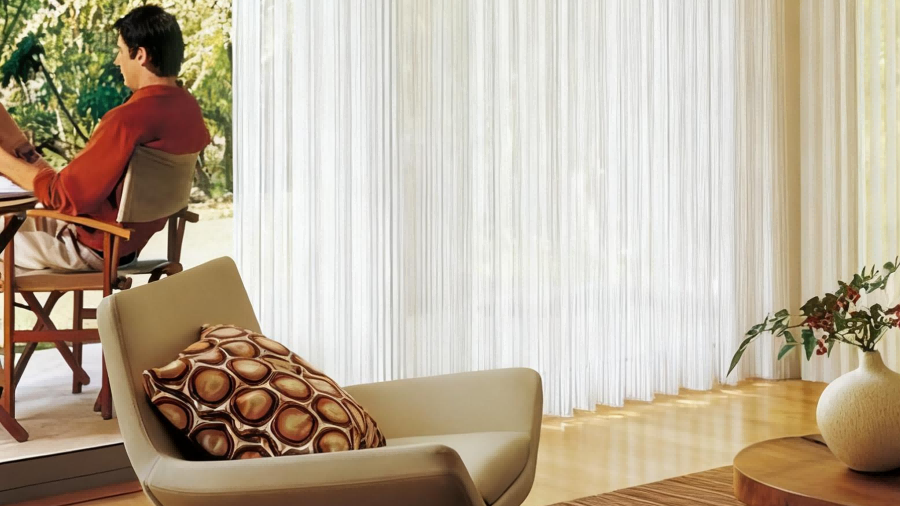
With the rapid proliferation of smart homes, people are placing higher demands on the comfort, efficiency, and level of intelligence in both residential and commercial spaces. From curtains that open automatically at dawn to blackout systems in hotel rooms that adjust automatically based on light levels, curtains are no longer merely decorative or functional tools for blocking light; they are becoming an integral part of smart spaces.
Particularly in diverse settings such as villas, apartments, and hotels, traditional manual curtains have gradually revealed numerous limitations, including inconvenient operation, difficulty in centralized management, and the inability to integrate with other smart devices. Against this backdrop, smart curtains and motorized curtain systems have emerged, delivering a more efficient, comfortable, and sustainable user experience through automated control and system integration.
In this article, we will start with the basic concepts to systematically analyze the composition and operating principles of smart curtains and curtain motors and further explore their practical applications in settings such as villas, apartments, hotels and commercial space.
Key Components of a Smart Curtain System
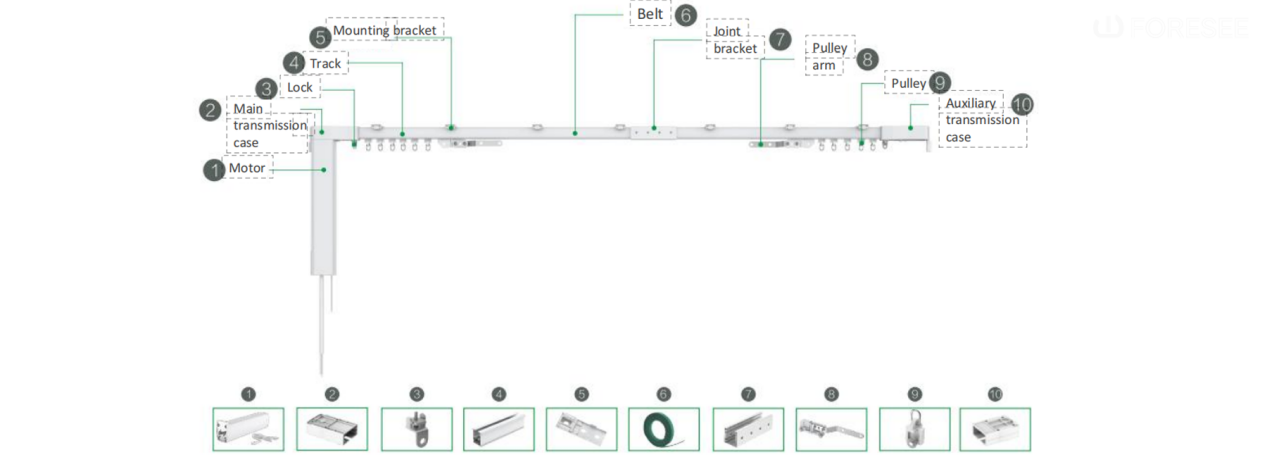
A smart curtain system is built around three essential components: the curtain motor, the track system, and the control system. Each plays a distinct role, yet all three must function in harmony to ensure smooth, reliable, and intelligent curtain operation across different environments such as villas, apartments, and hotels.
Curtain Motor
The curtain motor serves as the driving force behind the entire smart curtain system, transforming electrical energy into the mechanical motion required to open and close the curtains. By replacing manual pulling, the motor enables effortless operation and consistent performance, regardless of curtain size or weight. In high-end residential or commercial scenarios, such as villas and hotels, motors are typically designed with high torque to handle large or heavy fabrics without strain. At the same time, quiet operation is a critical feature, especially in bedrooms or hospitality environments where noise can directly impact comfort and user experience.
Modern curtain motors also emphasize energy efficiency and precision. DC motors are commonly used to ensure stable movement, smooth acceleration and deceleration, and long-term durability. Depending on installation requirements, different power options are available, including wired systems for continuous power supply, battery-powered solutions for easier retrofitting, and even solar-assisted configurations for enhanced sustainability. In essence, the motor functions as the “engine” of the system, determining not only how the curtain moves, but also how reliably and quietly it operates over time.
Track System
While the motor provides the power, the track system acts as the structural foundation that guides the curtain’s movement. It is along this track that the curtain travels, making its design and quality essential to achieving smooth and consistent operation. Typically installed on ceilings or walls, the track system must be precisely aligned and securely mounted to support both the weight of the curtain and the motion generated by the motor.
In modern applications, track systems are highly adaptable and can be customized to suit a wide range of architectural designs. Whether for straight windows, curved glass facades, or uniquely shaped layouts, the track can be engineered to match the specific requirements of the space. It also supports different curtain configurations, such as center-opening or single-direction movement, allowing flexibility in both residential and commercial settings. Integrated pulley and transmission mechanisms further ensure that the curtain glides smoothly with minimal friction. From a system perspective, the track is the mechanical pathway that ensures durability, precision, and long-term performance.
Control System
What truly distinguishes a smart curtain system from a conventional motorized setup is the control system, which introduces intelligence and connectivity. Acting as the central interface between the user and the hardware, the control system enables multiple ways to operate the curtains, making them adaptable to modern smart living environments. Users can control curtains through mobile applications connected via WiFi or platforms like Tuya, use handheld RF remotes for quick access, or rely on voice commands.
Beyond manual control, the system also supports automation features that significantly enhance convenience and efficiency. Curtains can be scheduled to open and close at specific times of the day, synchronized with daily routines, or adjusted automatically based on environmental inputs such as sunlight intensity or indoor temperature. This level of responsiveness allows the curtain system to become an active part of a larger smart home or building ecosystem.
How Smart Curtains & Motor Work
Smart curtains operate through a coordinated interaction between control systems, motorized components, and mechanical structures, forming a seamless automation process. 4C Global smart curtain designed to deliver stable, quiet, and responsive performance across both residential and commercial environments.
The operation begins when the system receives a user command. This input can come from multiple control interfaces, reflecting the flexibility of modern smart curtain solutions. Users may activate the curtains through a mobile application, a handheld remote controller, or integrated smart home platforms that support centralized management. In more advanced setups, commands can also be triggered automatically through pre-configured schedules, allowing curtains to open or close at specific times without manual intervention. This multi-channel control capability ensures that the system can adapt to different usage habits and installation scenarios.
After receiving user command, the curtain motor activates and begins driving the curtain along the track. The motor’s internal mechanism converts electrical energy into controlled mechanical motion, pulling the curtain smoothly through the track system. Thanks to the design focus on high torque and low noise, the movement remains steady and quiet, even when handling large or heavy curtains typically found in villas or hotel applications. The integration between motor and track ensures synchronized operation, minimizing friction and maintaining consistent performance over time.
Beyond basic open-and-close functionality, smart curtains can also operate as part of a broader automated environment. Through scheduling features, curtains can follow daily routines, such as opening in the morning and closing at night, enhancing both convenience and energy efficiency. When integrated into a larger smart home or building system, curtain operation can be linked to predefined scenes, allowing coordinated actions with lighting, climate control, or other devices. This transforms the curtain system from a standalone mechanism into an intelligent component of a connected space.
4C Global Smart Curtain Categories
Based on the 4C Global smart curtain product catalog, the system is not limited to a single curtain type but is organized into multiple specialized series. Each category is designed to address different architectural needs, curtain styles, and application scenarios, forming a more complete and flexible solution portfolio.
Dream Blinds Series
The Dream Blinds Series represents a more advanced and design-oriented smart curtain solution, combining shading and lighting into a single integrated system. A key feature of this series is its built-in 2-in-1 LED driver with a luminous track, which allows curtains and ambient lighting to function together seamlessly. This makes it particularly suitable for high-end spaces such as villas and boutique hotels, where both aesthetics and functionality are equally important. In addition to its visual appeal, the system supports app, voice, and timer control, along with stable power performance and automatic travel memory, ensuring smooth and intelligent operation.

Roller Blinds Series
The Roller Blinds Series is designed for applications that require precise control of light and a clean, minimalist appearance. It is equipped with a high-torque motor optimized for roller blind systems, enabling stable and efficient performance even across large window surfaces. The system emphasizes smooth and quiet operation, making it suitable for environments where both visual simplicity and acoustic comfort are important. With dual wireless control support and wide voltage compatibility, this category is well-suited for apartments, offices, and modern commercial spaces where flexibility and reliability are essential.
Opening & Closing Series
The Opening & Closing Series is specifically developed for traditional curtain styles, particularly those involving heavy fabrics or large spans. It features a powerful motor capable of handling substantial curtain weight while maintaining smooth and quiet movement. This makes it ideal for villas, luxury residences, and hotel environments where layered curtains—such as blackout and decorative fabrics—are commonly used. Like other series, it supports dual wireless control and wide voltage systems, ensuring consistent performance across different regions and project
Smart Curtain Applications for Villas, Apartments, Hotels and Commercial Space
The application of smart curtain systems extends across a wide range of environments, where they contribute not only to comfort and convenience but also to overall space efficiency and intelligent control. According to 4C Global’s space solutions concept, smart home technologies including curtains are designed as part of integrated building solutions that enhance residential and commercial spaces through automation, energy efficiency, and modern design.
Villa
Smart curtains are typically integrated into a complete smart home system to support a high level of customization and luxury living. Large spaces, expansive windows, and premium interior design require solutions that combine strong motor performance with seamless automation. Curtains can be coordinated with lighting, climate control, and other systems to create a fully connected living environment, improving both comfort and lifestyle quality.
Apartment
As smart home adoption expands beyond luxury housing, apartments are increasingly becoming ideal environments for automation, where convenience and daily usability are key priorities. Smart curtains allow apartment to easily manage light and privacy while supporting energy-saving routines, making them a valuable upgrade for modern urban living.
Hotels
Smart curtains play an important role in both guest experience and operational management. They are often integrated into centralized room control systems, enabling coordinated control of lighting, temperature, and shading. This allows hotels to deliver a more personalized and comfortable stay while also improving energy efficiency through automated control based on occupancy or time schedules. As a result, smart curtains have become a standard feature in many modern hospitality projects.
Commercial Spaces
Offices, showrooms, public buildings, smart curtains contribute to a more efficient and adaptable working environment. They help regulate natural light, reduce glare, and support energy management by controlling heat gain from sunlight. Integrated with broader building management systems, they enable centralized control across multiple areas, improving both operational efficiency and user comfort.
Conclusion
4C Global Smart curtains and motors offer a transformative solution for villas, apartments, hotels, including the Dream Blinds, Roller Blinds, and Opening & Closing Series, provide tailored solutions to meet diverse needs, from luxurious residences to practical urban living. By integrating automation with architectural design, smart curtain systems elevate the user experience. Explore 4C Global’s smart curtain options today to upgrade your living and commercial spaces.